|
Monday, September 26, 2011
Address (Project: Another Country)
7:18 AM
Address (Project: Another Country), Alfredo Juan Aquilizan & Maria Isabel Gaudinez- Auilizan
An installation that caught my eye during the Singapore Art Biennale 2008
would be the ‘Address (Project: Another
Country)’ by the couple, Alfredo Juan Aquilizan and Maria Isabel
Gaudinez-Aquilizan, who are both not local. They used to live in Philippines
then migrated to Australia.
Inspired from the balikbayan
box, they began to “cube” objects they have been storing in their home for more
than 10 years. And by joining these “cubes” of objects together, the couple
managed to form a “room”. This “room” created has a door and a narrow
passageway for the audience to actually go inside the “room” and view the other
side of the balikbayan box.
I think that this idea is very
creative as you could walk through the passageway in the “room” without worrying
that the objects would start crumbling down or bits and pieces would fall on
you even though the objects are not glued together. These items are arranged in
an artistic manner such as the cubes were clearly defined even without a
separating line.
Balikbayan
boxes are used a lot by Filipino migrants to store and relocate their
belongings from one place to another. The Aquilizans used
these boxes to “cast” their own belongings as they migrated from the
Philippines to Australia. To me, this is a smart idea as instead of letting so
many items go to waste by throwing them away, the Aquilizans used them to
create an art work. It sounds abit peculiar but I feel that the outcome of
piling your unwanted objects in such a way is really interesting and something
new to many people.
I got a
shock when I looked closer at the items piled together as some of the
balikbayan boxes contain scary items. For example, glow in the dark pictures of
monsters, severed Barbie dolls, a baby doll’s arm sticking out of a pile of blankets,
etc. However, some items were really cute and it just creates a temptation
to pluck items from that “cubes”. Such items include: Mr Happy toy, teddy
bears, figurines, etcetera. Thinking about how the rest would crush my friends
and I if one item was taken out, the possible outcomes takes that feeling away.
Some
items that I found funny were naked baby dolls getting squashed by towels, a
Telly tubby toy behind a microphone and toy houses with toys living in them.
These items also reminded me of how much stuff I can have at home. It made me
want to clean up my house one day and donate unwanted stuff to the Salvation
Army.
Come to
think of it, being able to pack so many objects into such neat “cubes” really
takes a lot of effort, calculations and planning. Everything must be planned
correctly and stacked in an orderly manner or the “room” would be unstable.
Especially the stacking of objects at the top must a hassle as the couple would
have to climb up and down a ladder.
I
really enjoyed viewing this art piece and had a fun time studying each “cube”
of items. Though some were obscene like naked Barbie dolls, I still had a good
laugh at how strange the Aquilizans personal items were. The Singapore Art Biennale never fails to surprise me :)
Labels: writings
Saturday, September 24, 2011
Soap
7:55 AM
Fei Zao (2008) by Paulo Tamburella
As I stepped into the Singapore
Art Biennale 2008, I saw a white sheet of lumpy objects scattered all over the
ground underneath a tree. Those lumpy objects had a sweet smell which attracted
me over to have a closer look. Curiously, I went over and realised they were all
soap bars!
This art piece by Paolo
Tamburella involves more than 8,000 bars of soap. Weeks were taken simply for
unwrapping and cutting these bars of soap even with volunteers. To make the
newly opened 8,000 bars of soap look used, Tamburella and the volunteers fused two
or more soap bars into a lump. This
was a monumental task which required much dedication and determination from the
volunteers involved and Tamburella himself. Some volunteers even sacrificed their entire week’s
time just to fuse soap!
I found it quite strange that so many people
would dedicate so much effort and time for an art work. Usually it would be the
artist himself who is so dedicated to his work; I never knew that people would
actually help the artist complete his art piece without getting paid or asking
for any sort of reward.
Opening more than 8,000 bars of
soap, cutting them then fusing them is indeed a very tough job. The amount of
effort and strength used for this art piece must have been sky high. However, I
do not think that all these efforts are wasted. The smell of this art piece
attracts attention and simply standing beside that white blanket of soap makes
me feel calm and serene.
Tamburella made this art piece to depict a
life lived, with daily routines and rituals that mark out a lifetime use of
consumption production, such as soap. The idea of repeated actions in daily and
ordinary life associates to some memories. And these memories are Tamburella’s
attempts to show an aspect of deep humanity.
I feel that Tamburella has
successfully shown an aspect of deep humanity. When I was looking at the art
piece, the smell reminded me of times in the bathroom and some incidents like
bubble baths or falls. The empty chair and pail reminded me of my previous maid
who sometimes washes our clothes manually. And the emptiness of that chair
depicts that she has gone somewhere else.
The tree in the middle of the
soap field also adds to the atmosphere. The tree is huge and stands strong
alone in the middle of a white space. I feel that the size of the tree shows
that it is old. It is lonely with no company but it does not seem bored like
how one bathes everyday yet one does not get bored of it.
I found this work rather
interesting and the reason behind the making of it even more. This is the first
time I ever saw an art piece that uses the sense of smell to change the mood
and feelings of the audience. And I certainly hope to be able to view more of
such art pieces.
Labels: writings
Sunday, September 18, 2011
New Artwork in Nanyang?
11:39 PM
In the recent Block Test 2 paper, there was a question about choosing between 2 artworks to put in my school, and why i chose it.
I thought it was a really interesting question, instead of the mundane "describe the subject matter, compare and contrast them, describe colours and brushwork, etc." I have never encountered such a free response question and I feel that we should have more questions in our exams that are similar to this. :) Honestly, I wouldnt mind taking exams if all the questions were as "casual" and fun to do like this one.
Here are the 2 given works to choose from:
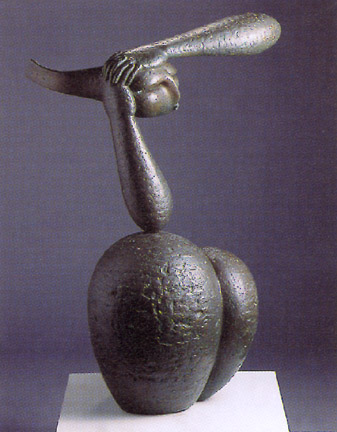
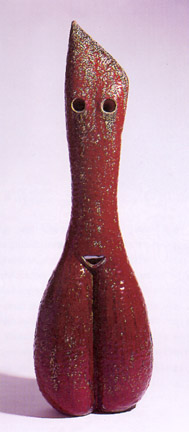
Looking ahead, 1987, Ng Eng Teng
"Growth", 1985, Han Sai Por
And even though i did not score 10/10 for this, i will still post my answer up because i truly enjoyed doing this, maybe you can choose too and decide which one you would put up? For now, let me try to convince you that "Growth", 1985, by Han Sai Por is more practical than "Looking Ahead", 1987, by Ng Eng Teng.
In my opinion, I would choose "Growth" by Han Sai Por to be exhibited in Nanyang Girls' High School as part of our permanent art collection. I also think that the work should be exhibited in front of the General Office that is where the behind the scenes work is done to help maintain and sustain the school, which is similar to being the heart of the school as it ensures that the school does not fall.
I feel that "Growth" is more appropriate than "Looking Ahead" as during education, students are still growing, and are still very pure, being groomed into someone. The forms are very organic and seem to grow into something else and hence, I feel that this is symbolic to the development in students' minds and personality.
Han Sai Por has also taught in Nanyang in the past and has three works found within the compounds of the school, which includes "Spirit of Nature" and "Family of Three". Both artworks depict organic forms budding and a sense of movement which seems to head for the sky, as if achieving new heights. Hence i feel tha t"Growth" would go well with these two other works, especially since they are located near each other along the driveway to the General Office. It is like leading from one work to another to tell a story and the motto of the school. As "Growth" is white, pure, simplified and delicate forms, it embodies some of the values of Nanyang such as simplicity and respectability.
Han Sai Por also received formal art education which is what Nanyang provides. As she is a female artist, she would be able to inspire many art students that that Art is not a hopeless route, it is not a dead end. Her main idea is that man is part of nature, not a part from nature. Therefore, in our increasingly fast paced modern world, I feel that it is important to feel connected to nature and remain true to oneself. "Growth" can remind the students not to be too focused in studies and sometimes think about nature and with global warming as an uprising threat, think of ways to salvage it and save the earth.
It is also important to be as a society, not an individual, to think on a larger scale that we are part of the world, instead of thinking merely for ourselves. This is another key idea in Han Sai Por's work whereby we cannot let modernization affect the purity within and I feel that this is expressed very well in "Growth". Nanyang being a highly competitive school, it is important for students to help each other out and think about others instead of their individual self. Instead of thinking about themselves, doing things for their benefits but causing harm to others, "Growth" will hopefully remind the students to look at the larger picture and realize how their actions affect the world around them. This is like staying back to study, and make the school custodian wait for you before they can go home. Even if you don't mind eating dinner late, the school custodians would have to eat dinner later also, and sometimes they would not be able to eat their meals with their family (some of them mind a lot) so we have to be more considerate and less selfish.
I actually hope that "Growth" would be placed in our school for real, but i know it's like 99.9% chance it would not so nevermind :( Labels: writings
SriKandi
1:59 AM

Lucia Hartini, Srikandi (1993), oil on canvas, 150 cms x 150 cms
The use of space, colour and brushwork. Srikandi by Lucia Hartini 1993 depicts herself as the main subject matter, dressed in the blue cloth that the female warriors of Indonesia. She appears muscular and stands arms and legs akimbo in the centre of the painting and has a very strong and independent look. In this painting, Lucia Hartini repels the critical and doubting eyes of society, no longer rendered by them thus she has courage. There is evident use of geometrical shapes. This can be seen in the many triangles formed by the zig zag brick walls as well as the triangle-shaped vision shooting from her eyes. Her 2 arms also form triangles and this gives the painting a very sharp and fierce feel. Also, the cracks and zig zag lines create a lot of angles. This contrasts to the soft flowing fabric of the blue cloth she is wearing as well as the moon and the fluffy clouds in the back ground which makes the painting seem peaceful, as if Lucia Hartini has found herself and has settled down in society. There is another contrast between the colours used to depict the blue cloth and the background, compared to the brick walls and her skin tone. The blue cloth that she wears and the clouds in the background make use of cool and calm colours such as blue and violet, this gives the painting a very tranquil feel, as if there are no more social issues that bother Lucia Hartini. This contrasts to the warm colours used to depict the brick walls and her skin tone which are different shades of orange. The brick walls are cracking and on the right, it is zig zagged while on the left, it is straight. This possibly depicts that it is straightening out and her life is becoming less complicated. It also leads into the distance and the viewer is unable to see where it ends. This possibly suggests that this is just the beginning and that her life will still continue to further unravel. There is a glow in her skin, as if she is shining and is very confident about herself. This shows that she is no longer subdued by society and is outstanding instead. The use of warm colours creates a very bright and powerful effect, as if she does not blend into the crowd but stands by herself as a strong person. There is a meticulous use of brushwork, similar to that of super surrealism. It is carefully blended and there is no visible brushwork. It is painted very realistically, and the forms are well defined and use of shadow to highlight certain parts of the cloth and the skin to add emphasis. The painting is painted realistically so that it is easier for viewers to relate to it and understand the message Lucia Hartini wishes to convey in her painting. Influences behind this work: Lucia Hartini is an Indonesian artist who is a Catholic in a predominantly Muslim community. She was a victim of domestic violence and her earlier works express the suffering she has endured. Over the years, her works change from revealing a self that is very powerless, into one that that has her own fighting powers. From fear and grieving into determination and confidence. In Central Java, there is a very prominent gender inequality whereby female artists are generally not recognised as compared to male artists, even if they are very talented in art. There are many talented women who are unable to complete art studies as the drop rate is high even though there is already a small intake. These women marry into families and are required to stop painting in order to support the family. They are also financially unable to study art due to the lack of support, hence it is very difficult and tedious to be a female artist as one has very little supporters, not recognised in the art industry and people generally look down on female artists. Women in Indonesia are expected to stay at home and take care of the family. Hence they are not allowed to go out to work and make a living for themselves. They are seen as a hindrance and stealing the male’s jobs if they do work. Therefore, female artists are unrecognised as the brothers or husband might feel insulted if their sisters or wife’s are recognised and theirs is not, even though they are the bread winners of the family. Women are expected to help out domestically and are usually subjected to domestic violence. Lucia Hartini herself has endured such hardships and she attempts to create new visions of women having a more important role in society in her works. She is a feminist and influential woman whereby she yearns for freedom from the norms and judgement of the world. This is depicted by the many spying eyes prominent in her works, whereby the eyes are constantly watching her, as if they know her every move and are constantly judging her. Hence, in Srikandi 1993, Lucia Hartini has depicted herself as a strong idealised figure, free from the doubtful and critical eyes of society. She repels these eyes as she is no longer subjected to the norms of society, instead she has settled down and is confident of herself. In a much globalised society today, Lucia Hartini is recognised as an artist due to international influence, her works not recognised by Indonesian collectors but by collectors from all over the world instead. Hence, this helped her gain her confidence and her social status in the world. In Srikandi, she is no longer weak and helpless, instead she is seen as a powerful figure draped in the blue cloth worn by female warriors of Indonesia, with her fist clenched. She has a fighting spirit, as if she represents women in society, fighting for their rights in society. Her arms and legs akimbo and is rooted to the ground, also the cloth has settled down and this shows that there is a sense of “weight” in the painting, as if she is of importance to the world and is no longer a mere floating figure. The eyes no longer watch her in this work, instead she is the one watching the eyes. She repels the critical and doubting eyes of society, showing that it does not affect her anymore. Srikandi is like a work of social realism, whereby it is showing the world that women do have a stand in the world and should not be repressed by society. It also tells women that they themselves should find their own fighting spirit and fight for their rights. Labels: writings
Saturday, August 20, 2011
Artstage's nakedman
2:20 AM
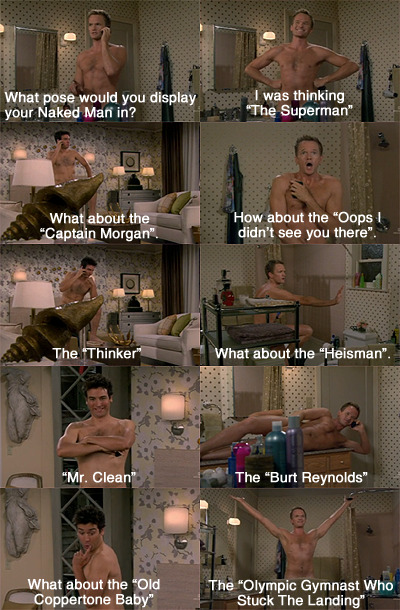
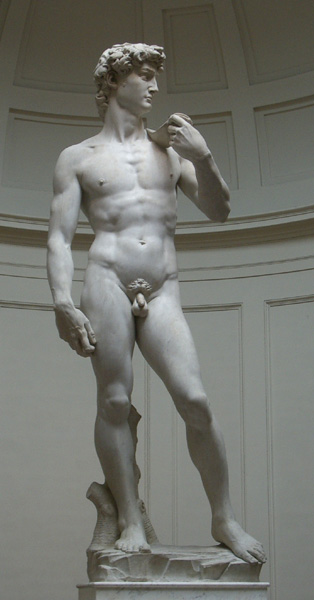
If you're a fan of TV comedy series, "How I Met Your Mother" you would know about the "Naked Man" and how it attracts girls ;) Art Stage 2011 also had a naked man in an artwork featuring the famous "The Two Fridas" (1939) by Frida Kahlo, a viewer and the artist. The artist and the viewer would then copy the pose and position of the fridas as shown below: The only obvious difference? Clothes.. if the artist had clothes. Mr. T Venkanna caused a huge stir in Singapore which is a fairly conservative country, by posing completely nude in a public art exhibition. I personally found this as an eye openner because art can be anything, just like the dadaist's theory of "i found it, i named it, therefore it is art" hahaha. Being a dancer, i am aware of dancers being required to dance nude yet be completely open and confident about it. Of course I have never done that before, but I have recently seen a piece, "Sehnsucht" with female dancers bearing their chests confidently, what ever size they may be. I felt that it was completely acceptable and not offensive at all, infact the dancers were so beautiful and confident, as if they were completely clothed. They even danced with other male dancers without feeling uneasy and this was when i realised that nudity is art too, after all, we weren't born with clothes on. This is our true human form. It is very common for artists to scuplt a nude figure.. manipulate the human form.. paint nude models.. but how many artists actually dare to showcase their own bodies in public, making themselves part of the art work themselves? How many artists dare to invite strangers to be part of the work, not afraid that the viewer would mess up the work and spoil the inteded message/effect of the work? I dare say a handful. Venkanna did the unconventional and inspired me to dare to do things people usually do not do.
Venkanna's artwork did cause a stir in Singapore, but i feel that this was something new to the art scene here. In remember in the artist square in paris, a woman was completely nude and was splashing paint on herself in public as a form of art. She received a warm welcome from the audience even though it was freezing cold there. It was considered completely acceptable in Paris, but I am sure that in Singapore, she would get stomped or something ridiculous. However, the art work being behind a black curtain shows that Venkanna is aware of the conservative aspect of Singaporeans. Hence the black curtain serves as a filter, whereby only people accepting nudity as art can choose to go in to appreciate his work. People who deem nudity as unacceptable, can choose to walk away and their view is blocked by that black curtain. I feel that we live in a country who does not dare to accept new things. If Venkanna dares to take photos of himself, posing like a girl, holding a stranger's hand, completely nude.. Why shouldn't you, completely clothed, be able to simply hold his hand and take a picture with him? This artwork is truly something new to Singapore and I hope that more singaporeans can be more open to art and accept the once deemed unacceptable.
Labels: writings
Tuesday, May 3, 2011
Art critics help viewers perceive, interpret, and judge artworks
11:27 PM
Have you ever wondered what was the message behind a certain artwork was? Even after staring at it for a long time, you still remain clueless, wondering why it was created that way, why such forms were used. And after coming up with some strange theory, you read the brief description of that piece and realized that you were totally wrong about the work.
I personally feel that art critics DO help viewers perceive, interpret and judge artworks. Every artwork has an intended message behind it and not everyone is able to understand and interpret it accurately. Art critics then come into the picture. Having experience in the art world, they are trained in interpreting artworks. Viewers, however, may or may not receive art education. Art critics look at artworks from a different angle, going more indepth and picking out important information like certain subject matter. They analyze aspects which people would usually brush pass, such as how colour, brushwork and use of space influences the artwork.
Art critics gives an indepth description of artworks and helps the audience to understand them, giving them a headstart. Hence, when the audience looks at the artwork, they would be able to notice more details that they would normally miss out. They would also question why certain subject matter is used, looking deeper into the meaning of the work.
On the other hand, some might argue that art is freedom of expression and is limitless. Hence, how the viewers perceive an artwork is completely up to them. Having art critics implant an idea into the viewers minds, limits the exploration of the artwork. This is very true in abstraction as the forms are very free and undefined hence tapping on the viewer's ability to imagine and create an entire new interpretation of the artwork. Having an art critic explain the details to the viewers, narrows it down to one possible interpretation. This takes the fun out of viewing artworks and does not benefit viewers in any way. Viewers may also not be as curious as before.
To me, art is supposed to set minds thinking, to convey a message. And if the audience is unable to see the meaning behind an artwork, there is no point in making art for viewing purposes. Artists have an underlying message and art critics help the audience see it. With their views and interpretations about the work, the audience is able to better understand the work and have most of their questions answered. As art allows viewers to imagine and interpret works on their own, viewers may interpret the work differently, sometimes what they perceive it to be, is totally different from what the artwork really meant. Art critics help such incidents from happening and leading viewers on to the right track. Who ever said that you have to read what the art critic wrote in one shot? One way of viewing an art work could be skimming through the point of view of the art critic, then with a rough but not detailed idea in mind, re-look at the artwork and try to judge and question it again. Even though some parts may be different, but most of it should be similar to what the art critic felt. Most importantly, the general idea is there. Thus art critics do help viewers to perceive, interpret and judge art because they bring out the main idea of the works, highlighting the artist's concerns especially when they are not obvious. Labels: writings
|
Search
Labels
others
inspirations
writings
art works
course work
photography
Archives
 January 2011 January 2011
May 2011
August 2011
September 2011
Friends
Chermaine
Chiawei
Elizabeth
Heyao
Jiashin
Linhui
Liyi
Lois
Mingzhen
Rachel
Ruisian
Shihui
Shiyin
Shiyun
Valerie
Xinda
Xindi
Xuedi
Xueying
Zhiping
Zhiyi
Zhuhong
|
 C L A R E